
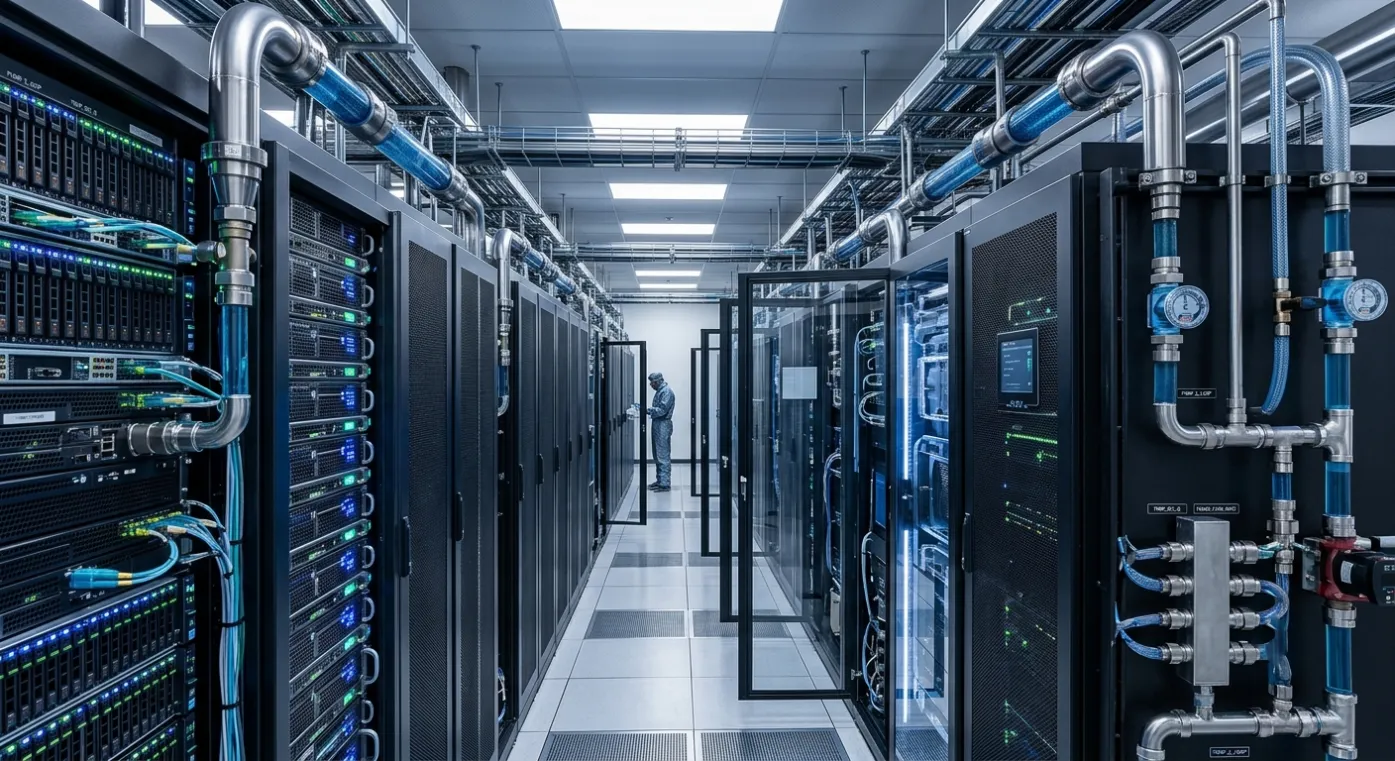
Artificial intelligence has become the defining technology story of the decade, and most of the attention has landed on its electricity demand. Power-hungry GPUs, sprawling server farms and the race to build ever-larger training clusters have made energy consumption the headline concern for anyone tracking AI’s environmental footprint. But there is a second resource being drawn down at scale, one that rarely makes the front page: water.
Every AI model, from the largest training run to the billions of everyday queries handled by inference, generates heat. That heat has to go somewhere, and in most data centres, water is doing the heavy lifting. As AI adoption accelerates, so does the volume of water required to keep the infrastructure behind it running cool. Industrial water treatment specialists are increasingly being drawn into conversations that, until recently, sat firmly in the domain of electrical and mechanical engineers, a sign of how central water has become to the AI conversation. For data centre operators, water management is quickly becoming as strategic a concern as power procurement.
Why AI Is So Water-Intensive
The computational demands of AI are met by dense racks of GPUs and specialised servers that generate substantially more heat than traditional computing hardware. Keeping this equipment within safe operating temperatures requires constant, high-volume cooling.
Training a large model is an intensive but finite process, drawing enormous amounts of water and power over weeks or months. Inference, by contrast, is ongoing. Every time a user submits a query, that request is processed on hardware that needs to be cooled in real time, meaning the water cost of AI does not stop once a model is trained. It continues for as long as the model is in use, multiplied across millions of daily interactions.
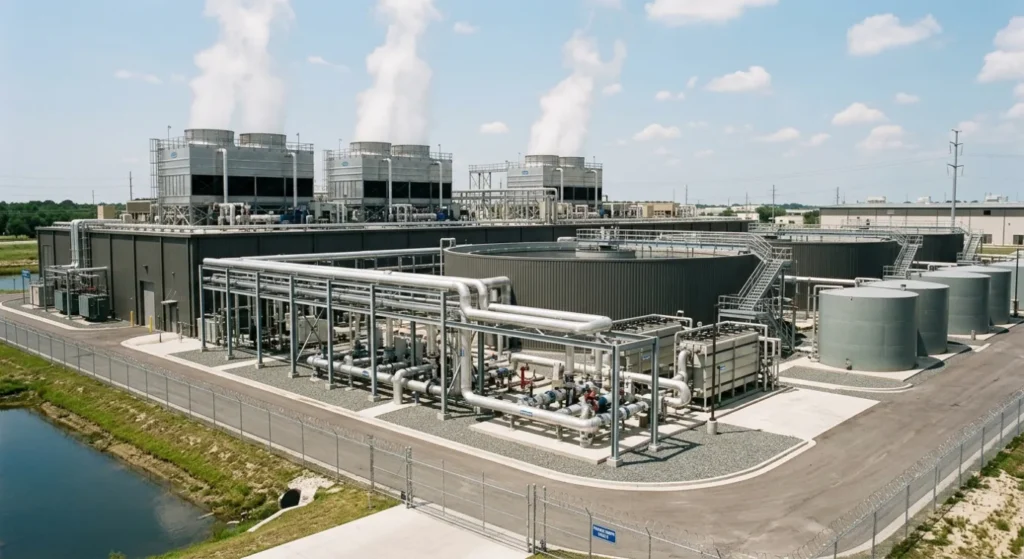
Most large facilities rely on evaporative cooling towers or chilled water systems to manage this heat load. Both methods are effective, but both consume significant volumes of water in the process. Estimates on water use per training run or per batch of queries vary depending on facility design and climate, but the pattern across the industry is consistent: as compute scales, so does water demand.
.
| Type | Water Demand Pattern | Key Detail |
|---|---|---|
| Training | High volume, finite duration | Draws heavily on water and power over weeks or months, then tapers off once training completes |
| Inference | Lower volume per query, but continuous | Runs every time a user submits a query, so demand accumulates across millions of daily interactions |
| Evaporative cooling towers | High water consumption | Relies on evaporation to dissipate heat, effective but water-intensive |
| Chilled water systems | High water consumption | Circulates chilled water to absorb heat, also draws significant volumes depending on facility design |
The Growing Strain on Local Water Supplies
Data centres are frequently sited in regions chosen for land availability, energy access or proximity to fibre infrastructure, factors that do not always align with local water security. Several high-profile projects have drawn scrutiny for locating water-intensive facilities in drought-prone or water-stressed areas, prompting pushback from local communities and regulators alike.
This tension is unlikely to ease. As sustainability reporting becomes a standard expectation for large technology companies, water usage effectiveness is emerging as a metric investors and regulators are paying closer attention to, alongside carbon emissions. Operators that fail to plan for water risk are exposing themselves to reputational, regulatory and operational vulnerabilities that were largely absent a decade ago.
Where Traditional Cooling Falls Short
Many existing data centre cooling systems were not designed with water scarcity in mind. Once-through or single-pass cooling systems draw water, use it once, and discharge it, resulting in high consumption relative to the cooling achieved. In regions facing tightening extraction permits or rising water costs, this approach is becoming increasingly difficult to justify.
Ageing infrastructure compounds the problem. Systems without adequate treatment are prone to scaling, fouling and microbial growth, all of which reduce cooling efficiency over time and increase both water and energy consumption as systems work harder to compensate. Left unmanaged, these inefficiencies quietly erode the reliability of the very cooling systems AI infrastructure depends on.
Smarter Water Management: The Solutions Data Centres Need
Forward-looking operators are shifting towards closed-loop cooling systems, which recirculate water continuously and require only a fraction of the makeup water used by open systems. Paired with water reuse strategies, such as recovering condensate or treating greywater for reuse in cooling processes, these systems dramatically cut the net water footprint of a facility.
Effective water treatment is central to making these systems work. Preventing scale and biological growth keeps closed-loop systems running at peak efficiency, extending equipment lifespan and reducing the frequency of costly maintenance interventions. Real-time monitoring adds another layer of control, allowing operators to catch inefficiencies before they escalate into larger operational or compliance issues.
The result is a cooling infrastructure that is not only more sustainable but more resilient, better placed to withstand tightening regulation, rising water costs and the physical realities of operating in water-constrained regions.
Why ABCO Water Is Suited to This Challenge
None of this is unfamiliar territory for industrial water treatment. Manufacturing plants, processing facilities and other continuous-operation sites have long faced the same core problem now landing on data centre operators: how to keep critical systems cool without draining local water supplies or running up against tightening extraction limits.
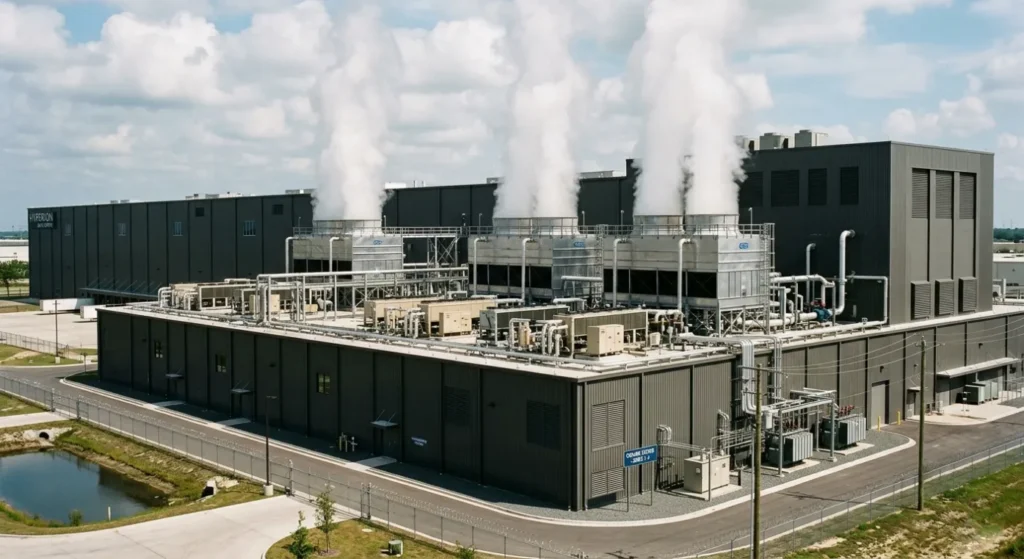
ABCO Water has spent years working with operators in exactly these conditions, including remote and arid environments where water security cannot be assumed and every system has to be designed for efficiency from the outset. That kind of experience does not translate into data centre cooling by accident. The underlying challenge, sustained high-volume cooling with minimal waste, is the same one ABCO has been solving in other industries for years.
As data centres look to move away from once-through cooling and towards closed-loop and reuse systems, the expertise required looks a lot like what ABCO already brings to its existing industrial clients. It is less a case of a new market opening up and more a case of an established skill set finding a new application.
Water management is fast becoming as strategic a consideration for AI infrastructure as energy management already is. Getting it right now, before regulatory and environmental pressures intensify further, puts operators in a far stronger position than retrofitting under pressure later.

Lucy Holmes is a tech writer here at Optimax, where she works closely with our design and development team to turn technical website topics into clear, useful content for business owners. With a background in Information Technology (Web Systems) from RMIT University and several years of agency experience, Lucy writes about website performance, UX best practices, SEO fundamentals, and practical ways AI is being used in modern web projects. She also spends time testing new AI tools, keeping across accessibility standards, and building small side projects to trial new frameworks. When she is not writing, she is usually out hiking or taking photos, often well away from decent mobile reception.